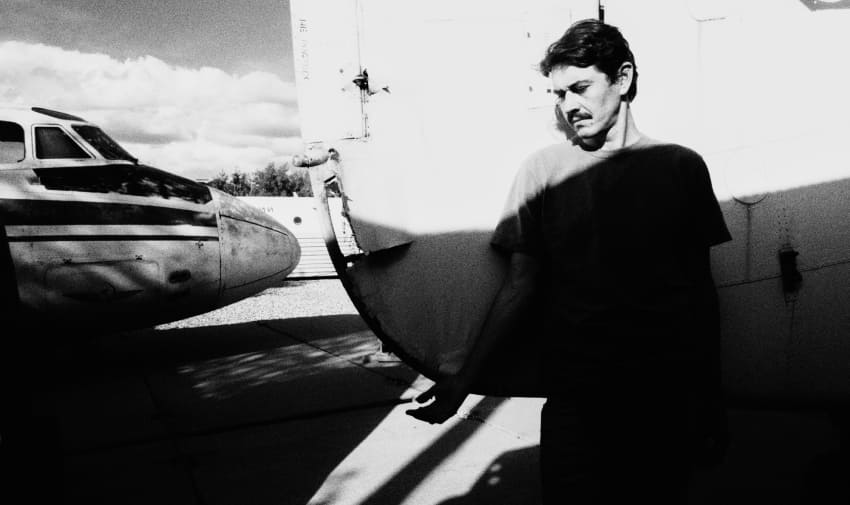
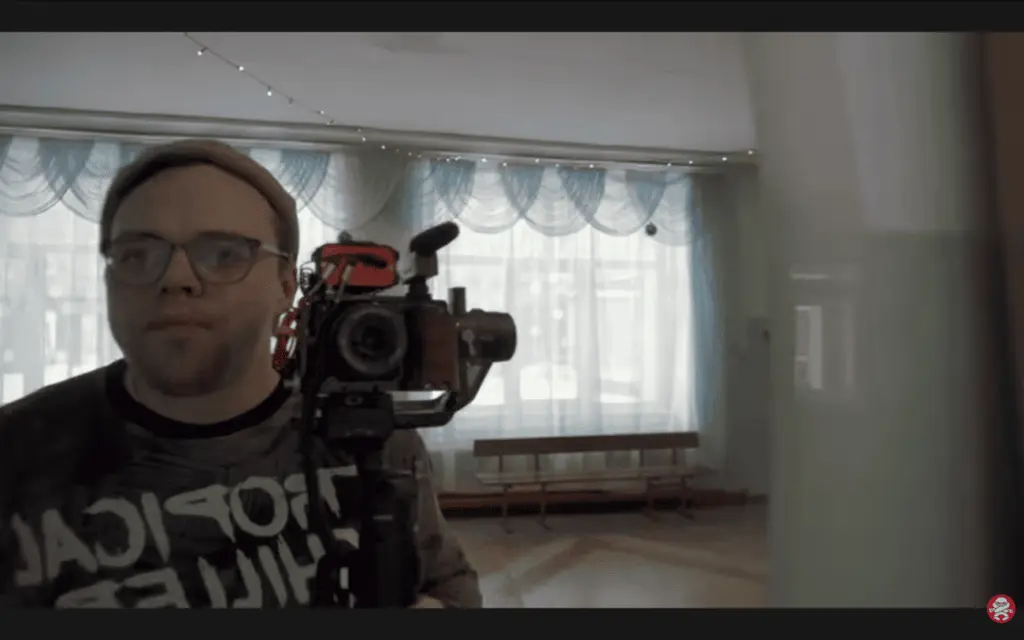
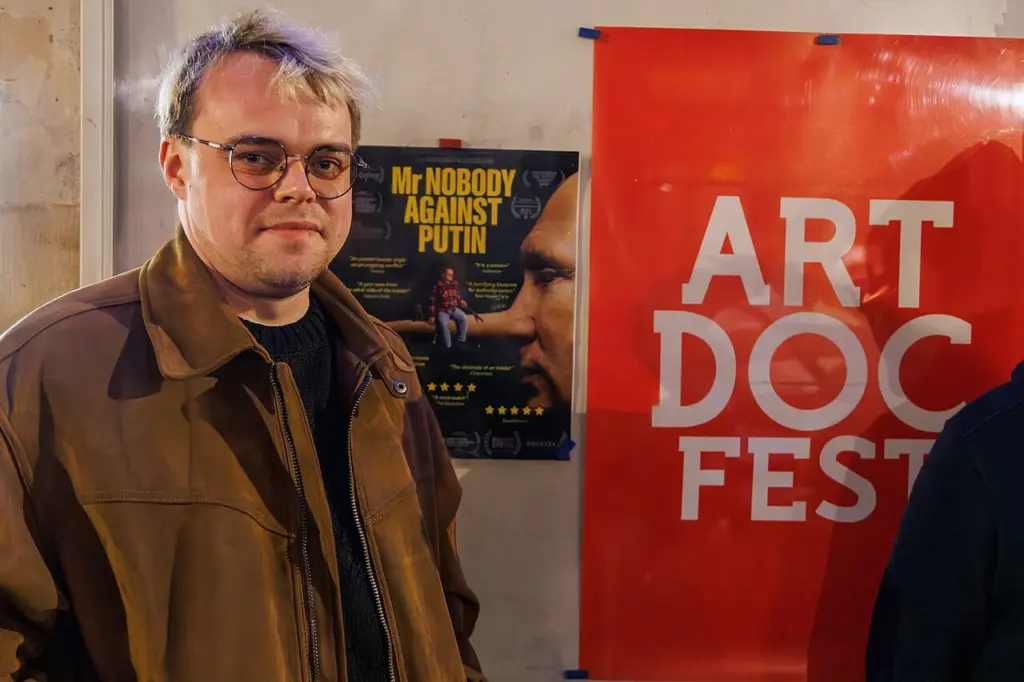
Karabash used to be called “the most polluted city in the world,” but then, in 2025, it achieved fame thanks instead to the documentary film Mr. Nobody against Putin. In 2026, the film was nominated for an Oscar. The film’s co-director, 34-year-old school events coordinator Pavel Talankin, filmed patriotic school events in Karabash and then left Russia, taking the footage with him. As soon as the film was released in the West, Russian media labeled it antipatriotic and called Talankin a traitor to the Motherland. New Tab journalist Lesya Sarnavskaya went to Karabash to find out what locals, including the people featured in the film, think about Talankin and his documentary.
Every person in this story who still lives in Russia has requested anonymity.
The original piece was published in March 2026.
An ordinary city
In February 2026, the film Mr. Nobody against Putin won the British Academy Film and Television Arts (BAFTA) award, and on March 15, it will compete for an Oscar for Best Documentary Feature. But if you ask people on the street in Karabash, a city of 10,000, what they think of Talankin’s film, many will say they’ve heard nothing about it.
“Was this reported anywhere?” an elderly woman waiting at a bus stop outside a school asks me, and then regretfully adds, “You’d think they would have something on Podslushka!”
She’s referring to the page “Podslushano Karabash,” or “Overheard Karabash,” on Russian social networking site VKontakte, which features not a word about Talankin. Talankin himself didn’t want the city’s name mentioned in the film:
“When I worked with [American documentary filmmaker] David Borenstein on this film, I said, ‘Let’s not mention Karabash, because this situation is universal for any city in Russia, for any school in Russia. And I wouldn’t want it attached specifically to this city.’ It really is everywhere. But he told me that the city itself is interesting and it would be better to leave it.”
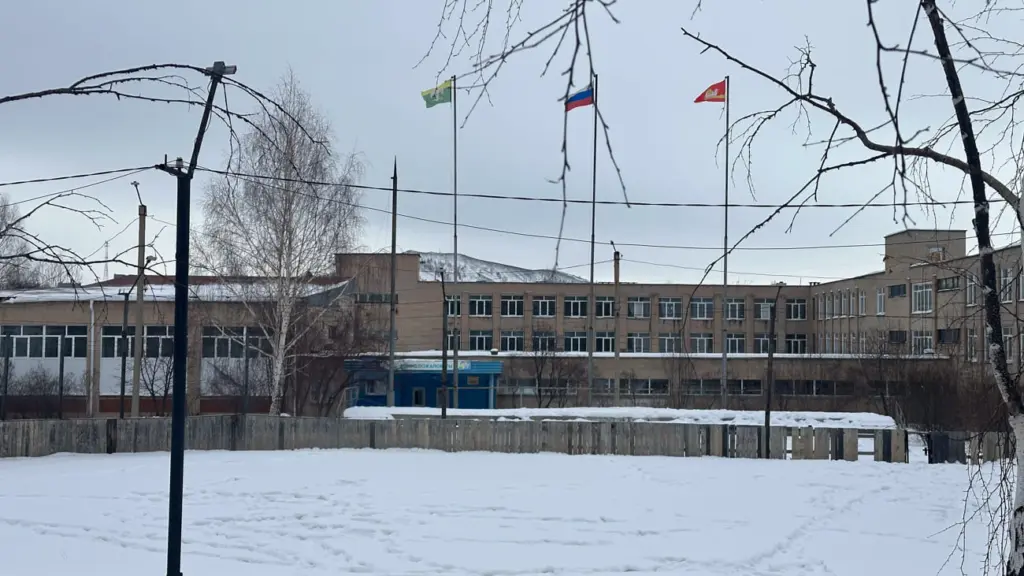
So Karabash, which Russian authorities declared an environmental disaster zone in the 1990s, has now also become famous as a symbol of military propaganda in schools.
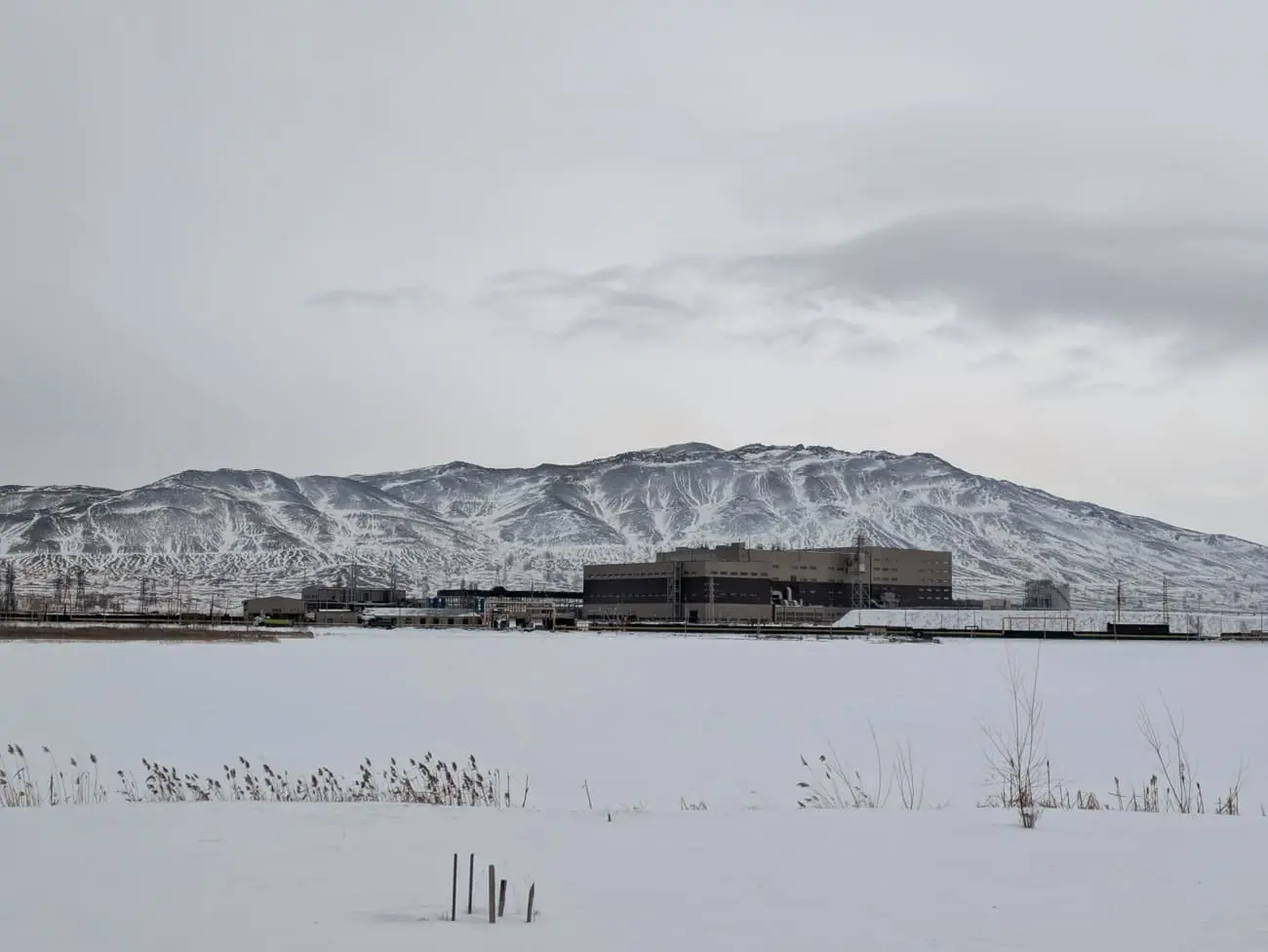
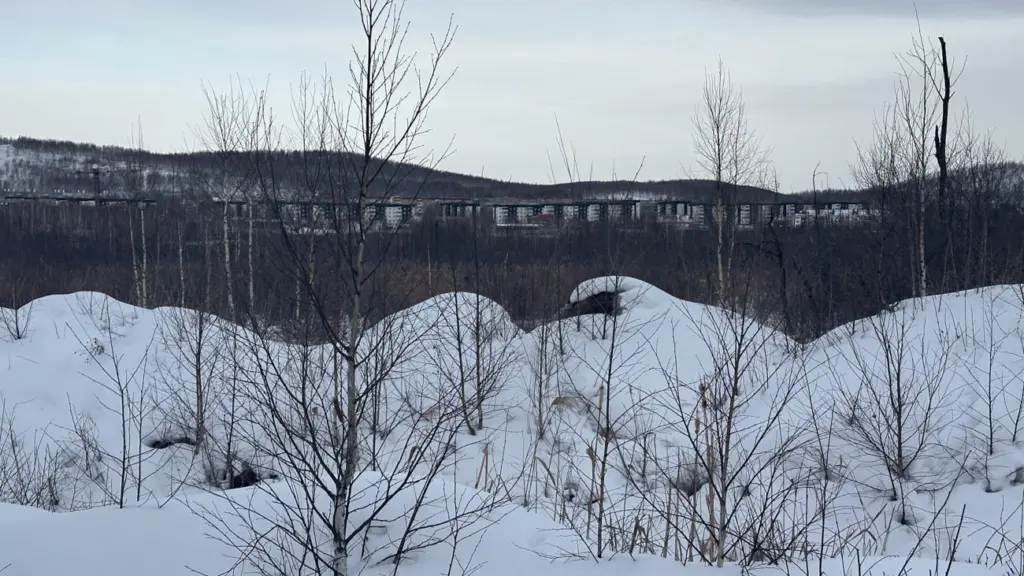
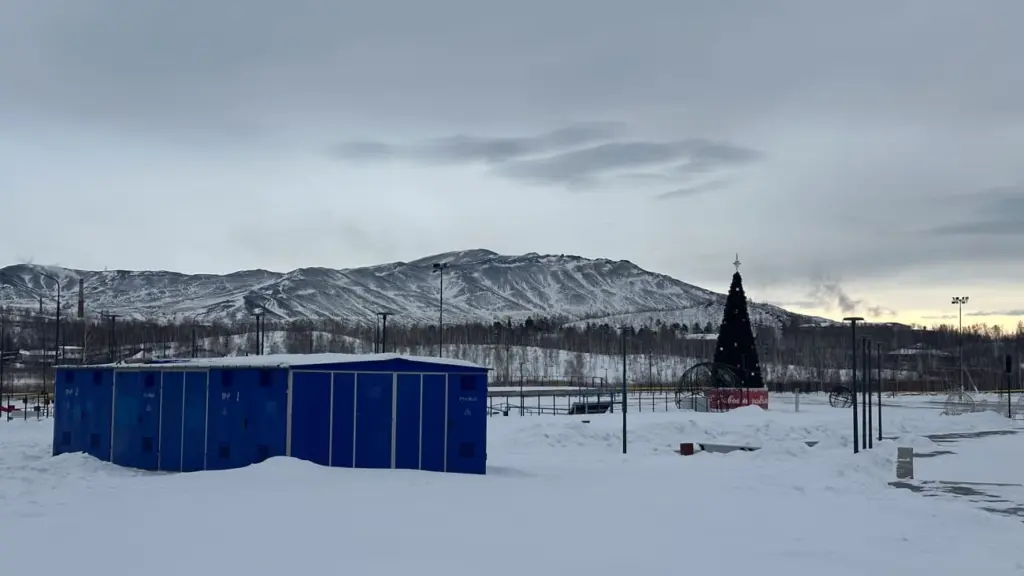
The first thing I see when I step off the bus in Karabash is the “Urals Calvary.” On the summit of Bald Mountain stands a 12-meter tall cross, and under it, the massive words, written in white stones, “Glory to God for everything!” (Until 2022 there was also another phrase — “Save and preserve.”) Opposite the cross are manmade black mountains: the 50-meter slag heaps from Karabashmed, the city’s main enterprise. Media reports and bloggers have called Karabash landscapes Martian, surreal, and even post-apocalyptic: industrial waste long ago wiped out all vegetation, and the rivers and streams have taken on an acid orange hue. These spaces, though, attract tourists to the city, and in 2020, the rock group Mumiy Troll shot a clip in Karabash for the song “Space Forces.”
On the day I arrived, there were neither Martian landscapes nor orange rivers — in winter, everything is whiter than white. The only notable things are the black mountains, whose rock is quite dark for this area even without the industrial waste. In the 1990s, Russians often called Karabash the most polluted city in the world, and the local copper smelting plant really has caused environmental problems, though no international environmental organization has officially rated Karabash the most polluted. I don’t sense any pollution in the air. Residents explain to me that unlike Chelyabinsk, where emissions are a mix of various particles, organic material, and carcinogens that form smog, in Karabash the main problem is gas. On some days (it depends on wind direction), sulfur oxides from the smelting plant are very noticeable and hit you right in the nose. Periodically, the city declares adverse weather conditions, and the plant has to reduce its production by 15-20 percent.
“The city has really changed for the better in this regard. When I was a child it was much worse,” a 19-year-old resident tells me. “Before, you couldn’t even walk normally from one building to another: you had to drink milk immediately because the gas would burn everything.”
Talankin says that Karabash is not the only place in the world with acidic rivers, citing the example of the Rio Tinto River in Spain, whose valley has been made into a public space. Because the valley’s landscape looks so alien, the project was named “Mars on Earth.” Now, schoolchildren visit the park for educational purposes, and scientists conduct research there.
“So, [there], you can discuss not only the good, but also the bad,” Talankin reasons, “but here in Karabash, they’re trying to keep it all quiet on this topic. I don’t like that approach.”
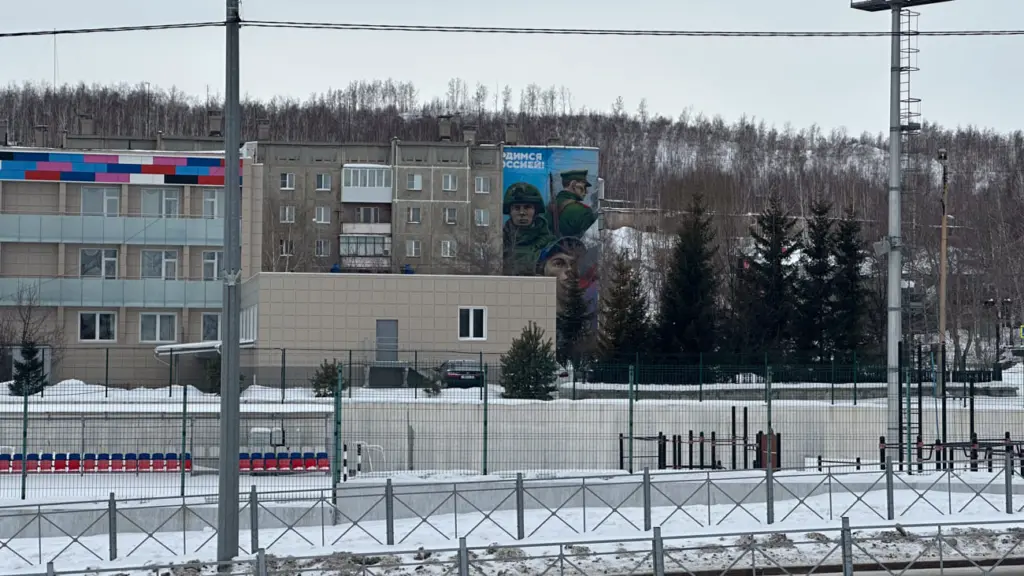
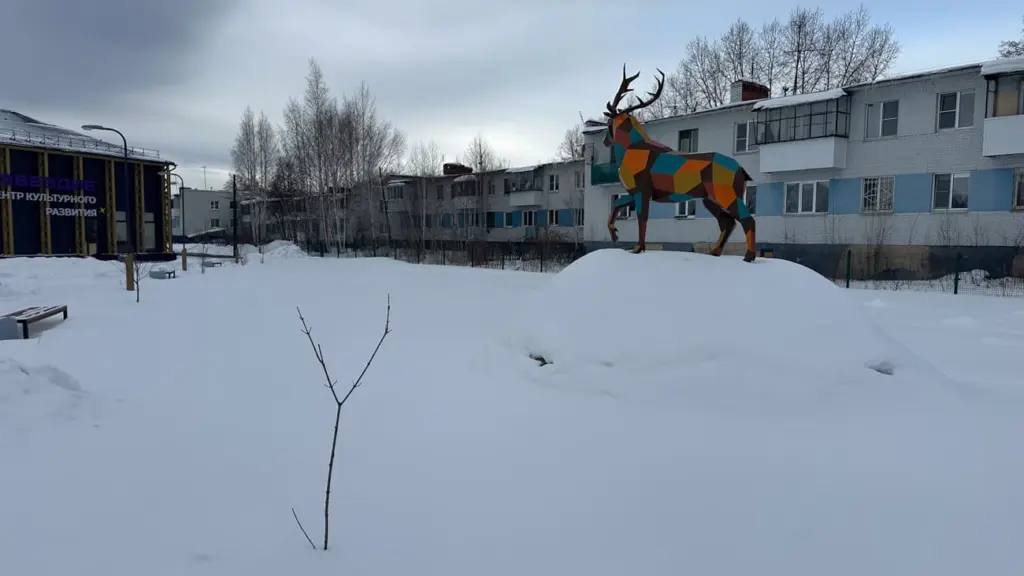
Despite its gloomy name, which means “black peak” in Turkic languages, Karabash is colorful. In the old city, ornate wooden huts in bright hues dot the hillsides, and in the new part of town, a gentle hillside hosts five-story apartment blocks built half a century ago. There are also more modern spaces financed by the Russian Copper Company (RMK), of which Karabashmed is part. Examples include the brilliantly colored facade of the sports-and-health complex, the Church of John Chrysostom with its manicured grounds and rich murals, the “Copper” residential complex with its low-rise buildings and Veterans Alley park area. The central road is lined with bright billboards with the slogan “Our business is copper,” and nearby stands a five-story building with a “We’re proud of Russia!” mural, which depicts two soldiers and a “young patriot.” This painting won the RMK-sponsored “Change your city for the better” contest, and went up on the wall of the building in 2025. “My dad is defending the country, me, and all of us today, too” one of the authors of the idea, Karabash fifth-grader Kirill Alyabyev, said on the occasion.
There’s no more military propaganda in Karabash than in other small Russian cities. As Pavel Talankin, the former events coordinator of Karabash School No. 1, observes in his film, “the truth is that it’s not so bad here.”
That’s what residents usually say, too, when you ask them about the city. Farmer and legislator Gennady Kremeshkov, whose cow died in 2010 from inhaling industrial emissions, told a journalist with the outlet 74.ru that poor environmental conditions were a daily issue in the Soviet era. “You couldn’t escape it. It would sometimes happen that you’re running cross country, and then there’s an emission. So then your throat hurts, you choke, then you catch your breath and keep running.”
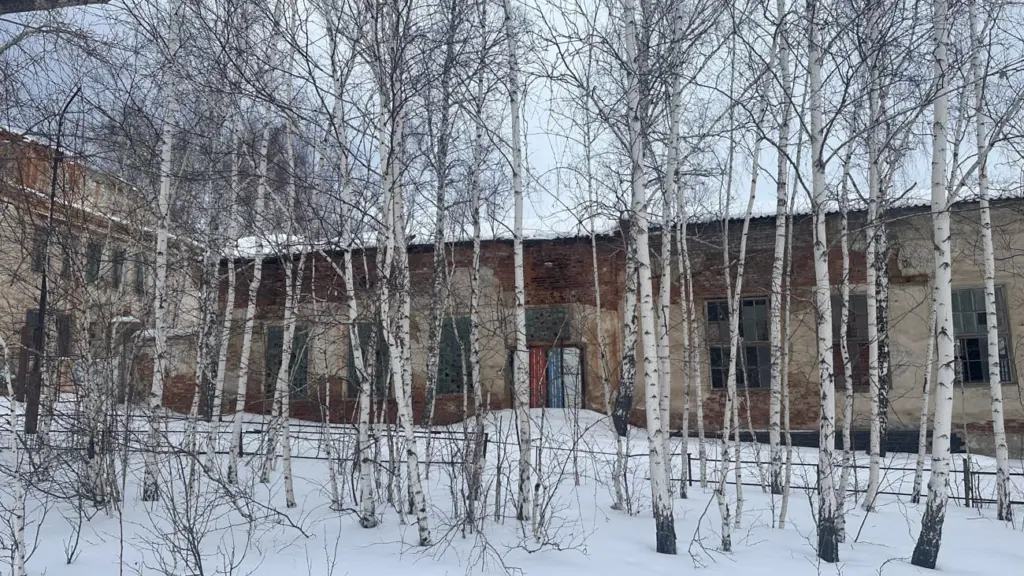
In 2026, when they’re asked whether it’s hard to live in Karabash, the older residents answer along the lines of, “What do you want? It’s an industrial city. When you live near such enterprises, you get used to the environmental problems. What else can you do?” Those who are a bit younger, including recent high school graduates, often leave to study in major cities and many do not return.
An informal office
Pavel Talankin, on the other hand, returned to his native city after studying at the Chelyabinsk State Institute of Culture. He graduated in 2013 from the film and television directing department and got a job in a Karabash school as a school events coordinator. He has said that his college emphasized television directing, but he preferred film.
Regional media outlets profiled Pavel more than once as a talented teacher. In 2018, he was named a “Leader of the 21st Century;” in the same year, kids from the Center for Aid to Children Left without Parental Care won a festival with an action-packed documentary film they made with Talankin; and in 2021, he and a group of 11th graders built Karabash in Minecraft, making even the city mayor proud.
Before 2022, Pavel Talankin wasn’t planning to go anywhere, he admits that he really loved his city. And students say that they loved him. He spent a lot of time with them, organizing various extracurricular activities and projects. He taught many of them to shoot and edit video, and for some, it developed into a serious passion. “Active children who want to learn something, to work on something, would gather at his place, and we would put up Christmas trees and shoot all sorts of video reports,” one of his former students says.

Graduates of the school remember that Talankin’s office felt somehow homey and informal: “Not only was the flag of democracy [a white-and-blue striped flag used as a symbol of democracy by Russians who oppose the war in Ukraine] hanging in there, but also the American flag and the Danish princess.”
According to one graduate, Talankin never imposed his political views on teenagers. “He was the only person that I could trust, that I felt comfortable with,” says another. Now she also appreciates her teacher because he “showed by example that you should always fight to the end and go toward your goal.”
In the film, Talankin says that he loves nothing more than spending time with children, expanding their horizons, making space for their creative development. But since 2022, there has been less time available for this work, because teachers have been required to hold “Conversations about Important Things” and to tell students about the “denazification” of Ukraine. And Talankin was required to film these lessons for reports to the Ministry of Education (he would later use this footage in his film). So it wasn’t of his own volition that he started to record what was happening in schools.
When the ideology of militant patriotism reached what was, in Talankin’s opinion, a critical level, he decided to resign. But first he saw a social media post about a Russian show that was seeking people whose work had been affected by the “special military operation.” Talankin responded, writing that he was a teacher who “was forced to do something that contradicts the very essence of his work.”
The show couldn’t use his letter because of censorship, but someone suggested that he might be able to get it published abroad. It eventually ended up with the American documentary filmmaker David Borenstein. He got in touch with Talankin, and the teacher decided to remain at his school to continue material for a future film.
Filming took a total of two and a half years. In the footage, we see how the Karabash school has changed since the start of the war; how Pavel’s former students end up at the front; how his former classmate dies there; how the brother of high school student Masha, one of the film’s main characters, meets the same fate.
At the same time, Talankin, as a videographer, also participates in creating propaganda. On assignment from the city administration in 2022, he filmed a Z car rally (supporters of Putin and the war in Ukraine use the Latin letter Z as a patriotic symbol), footage from which would then be made into a multimedia exhibit on screens at the city library. In the film, the teacher says that he observed how students watched this footage, and realized that for them, he’s a propagandist. As film critic Anton Dolin noted, Talankin “doesn’t look like a heroic fighter. He’s Mr. Nobody, as the title suggests, and this paradoxically helps him slip under the state’s radar.”
The image of Talankin, the main hero of the film, is that of a rather naive employee of the Russian educational system. He curses when he realizes that he’ll have to record patriotic videos with children, and asks a colleague what to do about it. It’s hard to imagine that reaction from teachers who have spent decades working under orders from the Education Ministry.
When the highschooler Masha worries about her brother who has been “mobilized,” another word for, essentially, being drafted, Talankin asks her whether he can’t just refuse to continue fighting and ask to go home. When I asked whether this was a device for the film, or whether he’s really like that, he replied “Yes, I’m really like that.”
The rupture
In the film, Talankin’s foil is history teacher Pavel Abdulmanov. Unlike many of his colleagues, who mindlessly recite the lessons from “Conversations about Important Things,” he approaches lessons about the war in Ukraine with passion and interest. In the film, when asked which historical figure he’d like to meet, this teacher lists head of the NKVD (the precursor to the KBG) Lavrenty Beria, SMERSH (Soviet counterintelligence organization) director Viktor Abakumov, and Chekist (the Cheka was the first Soviet secret police agency) Pavel Sudoplatov.
In 2022, Abdulmanov was voted best teacher by city residents as part of the “People’s Love and Recognition” prize. As a reward, RMK gave him an apartment in Karabash. “I’m really very touched! Because sometimes I get the feeling that they want to tear me apart. But it turns out they…love me,” the teacher said after looking over the dwelling.
One of the highschoolers featured in the film, who was in Abdulmanov’s history class from 9th to 11th grade, told The New Tab that he didn’t brainwash them the way he did younger students. “He’s an ordinary person, generally even a very kind person, he just has his quirks.” Another graduate of the school called Abdulmanov “a cheerful fellow” who, unfortunately, “really imposed his own views of the ‘everything everywhere is bad, but in Russia everything is good’ variety.” She added that “as a teacher he’s not bad, he didn’t require much and was loyal.”
According to another student, after the film’s release, Pavel Abdulmanov printed out something he’d said on camera on colored paper and hung it in his classroom: “A people that doesn’t know its past does not have a future.” He did not respond to The New Tab’s calls or messages.
Judging only by the film, the war and the situation in school seem to have distanced Talankin from the people nearest and dearest to him.
“The film literalizes the hackneyed comparison of motherland and mother: Talankin’s mom, a school librarian, gloomily brushes off her son’s seditious remarks and doesn’t realize that he’s leaving forever. […] Just as Talankin’s grown-up students increasingly avoid their dissident mentor, so his own mother dislikes delving into his internal conflicts. It’s as if the little motherland is rejecting a foreign body, a rupture is inevitable. The once mutual love between Talankin and Karabash becomes suddenly unrequited,” writes Anton Dolin.
Borenstein told journalists that apart from Talankin, all of the film’s heroes are portrayed as law-abiding citizens, for their own safety. That is true, but most of the Karabash residents who appear in the film display no enthusiasm for the war. Moreover, one scene depicts teachers discussing children’s declining academic performance with Pavel, and they all agree that one of the reasons is the dominance of patriotic events, which take up a lot of time.
Talankin’s departure from Russia was a precondition for the film’s release. The producers were worried about him and said they’d help him leave, but they didn’t say where.
“The choice was complicated, of course, but my mom still has other children. She’s not all alone, there are five of us. At first she took it really hard. But we’re in touch now, everything’s okay,” Pavel has said.
In 2024, he left Russia with the hard drives containing the footage he’d shot in schools.
Media controversy and harassment
“It’s interesting that for all those years he was around, he would film us and say, ‘My film is going to be on BBC.’ We laughed at him like he was an idiot,” remembers one graduate of the school. “But now he’s going up for an Oscar. I don’t think he himself really believed it.”
Both students and teachers were used to him filming, none of them could imagine that in 2026, a film they participated in would be nominated for a prestigious film prize, or that Talankin would transform from a teacher into a documentary filmmaker presenting his work abroad.
After leaving for the E.U., Talankin resigned from his school. Karabash residents learned about the film incidentally, from social media, in early 2025. By that point, foreign publications were writing about the film Mr. Nobody against Putin, which was then showing at the prestigious Sundance festival for independent films, in the U.S., and would soon arrive at European venues.
Local media in Karabash reacted harshly, immediately labeling the film anti-Russian. Chelyabinsk publication Moskovsky Komsomolets called the “quiet bespectacled” Talankin a “Judas” about whom the “whole city was maliciously gossiping.” The publication’s anonymous journalist, sparing no vicious epithet, basically suggested that the former teacher was a pedophile: “You must agree, it’s somehow strange that in the 21st century a grown man would quietly film children? In fact, it’s not clear that he only filmed them clothed? Or did he peek into the boys’ locker room?” The author concluded the essay with: “A dream come true, he’s in the West.”
Journalist Natalya Oss expressed the same opinion: “A teacher-traitor, teacher-Vlasovite [translator’s note: Vlasov was a Soviet general who defected to the Third Reich], teacher who sold out his students. The complete opposite of our great heroes,” she wrote on her Telegram channel. But judging by a postscript she added later to her post, even her audience didn’t understand the betrayal. Were the “lessons on patriotism” in Russia that the film depicts really “something shameful and secret.”
Journalists reported that Talankin’s mother allegedly had to resign from her school, and that she was afraid that ill-wishers would burn her house down. However, The New Tab learned in February 2026 that she had not quit and still works at the library. She herself declined to speak to us, but from conversations with other residents, we didn’t get the impression that anyone was trying to burn down buildings over a film — life proceeds in Karabash much as it always has.
In early 2026 on the “Moms of Karabash” VKontakte chat, a parent posted a request from journalist Artyom Degtyaryov, from the Russian news agency Regnum. He was looking for Karabash residents whose children appeared in the film Mr. Nobody against Putin. In the request, Degtyaryov wrote that Talankin filmed children secretly and that the film was now being “broadcast in foreign cinemas for commercial profit.”
“The Russian Presidential Human Rights Council is preparing a complaint against the American film academy regarding the commercial use of video material with the participation of children without parental consent,” his statement said. In late February, Regnum reported that the students’ parents were “considering” whether to file this complaint — this time against both the American and the British film academies. The article referred to Talankin as a “LGBT representative.” New Tab editors have a screenshot of the original post, and Dyegtyaryov also made a similar public request, though without mentioning the Human Rights Council. Regnum’s editor-in-chief, Marina Akhmedova, is a member of the Russian Presidential Human Rights Council. In 2023, the Supreme Court of Russia declared the “international LGBT social movement” an “extremist organization” and outlawed its activities in Russia.
Some of the kids’ relatives really are unhappy with the film.
“My dad reacted very negatively, but my mom said that there’s nothing wrong with the film, they just showed the truth,” one of the film’s main characters shared.
Another graduate of the school who appears in the footage said, “I was arguing just recently with my grandmother because of that film.”
One resident of Karabash, who works in the culture sector, says that she watched the film and was offended on behalf of the children whom Talakin filmed without parental consent. “As a patriot of my country, and as a patriot of my city, I thank fate that my children didn’t study at that time in that school, and didn’t end up in the footage.”
According to this woman, she and Talankin had a “clash regarding different views on what’s happening in the country” when she and her brother organized a patriotic car rally in Karabash in support of the “special military operation.”
“He once said, ‘Look, it’s in fashion to stick this nonsense [the Latin letter Z] on windows. If I see it in our city, I’ll personally smash the windows of the car.” To which I said, ‘Okay, try, it’s on my window.’ Well, one thing led to another. And he showed up at the rally with a broom. It was like a sign of protest. But when he saw how many people came in support, he just sat down quietly on a bench, stayed for a few minutes, and then silently retreated,” she recalled.
After watching the film, she said, she understood how “even the most patriotic event, created straight from the heart, into which people pour their souls, tears, and feelings of pride in their country, the feeling of compassion, and so on and so forth, can be distorted.” At the same time, she noted that the film is skillfully made, and doesn’t rule out that it could win an Oscar:
“Moreover, knowing other countries’ position and how they treat Russia, they’ll definitely like a film like this.”
In January 2026, Regnum published a column in which Roman Antonovsky, the host of the pro-Putin show KonserVatniki on public radio station Radio Rossii, accused Talankin of filming schoolchildren “on the sly.” The New Tab was not able to locate any students who had complaints against Talankin because of the film. No one we spoke to was opposed to the footage.
“I knew I was being filmed, because we often had conversations on camera, and it was like a video blog, I didn’t see anything scary about it,” one of the film’s main characters said. “I like it, the film didn’t exaggerate anything, and it showed everything as it is.”
Another graduate of the school, who also appears in the footage, believes that the film’s content was worth the fact that it was shot without people’s consent: “One hundred percent, it’s a really good film.”
The filming of schoolchildren has become the subject of discussion on social media even among those who are against imposing ideology and military patriotism in schools. Opinions vary. Some believe that making a film out of this footage was wrong, others think that Talankin’s actions are justified by the social significance of what his film shows.
Talankin himself says that it was the only way he could show what is happening in Russia’s schools from the inside. If he’d said anything at work about the film, they would have prohibited him from filming.
Silence
Some Karabash residents still react harshly to questions about Talankin and his footage. They won’t even discuss the film, let alone say whether they’ve seen it, even though it is publicly available on social media.
The security guard at the local community center, when asked about Talankin’s film, said she was in shock when she read about it in the media. She declined to say whether she’d seen it, but did say that she doesn’t think anyone would like it.
“And why didn’t you like it? Is it because he filmed without permission?” I pressed.
“Yes, because he’s lying. And what about you, do you agree with him?” she went on the attack. But she couldn’t explain what exactly Talankin got wrong.
“Well I’m not sure what to think!” I counter. “You didn’t like what he says about propaganda, is that it?”
“It’s stupid, all of it, there’s no propaganda.”
The tour guide at the city museum also flat out refused to share her opinion about Mr. Nobody.
“I will not say anything about that film, let me give you a tour instead, look, this is our museum, come in, it’s free,” she said to me.
The space houses an exhibition dedicated to the Great Patriotic War, as Russians typically call World War II, and taxidermied animals native to the Karabash region. Nearby is a collection of gadgets from the second half of the 20th century: old radio tape decks and televisions, a copy of Home Alone on VHS and a Ghostbusters cartridge for a Dendy console, printed images of old hairdryers, Tamagotchis and a plastic egg from a Kinder Surprise.
Talankin has said that he once donated his telephone collection to this museum. “Of course now it seems like trash, but in ten years it will be part of the exhibition.”
The tour guide gladly talks about museum artifacts and the departure of the city’s youth. But as soon as I try to bring up the film again, she spits:
“It’s all been discussed 150 times! Let some idiots disgrace our city again, for what? That film isn’t worth a broken penny, but let them nominate it for an Oscar if they want to. We have so much else that’s good to show off. Sometimes a stream of tourists flows to us, and then you think: yes, there’s something about our city. Our mountains and lakes attract them, nature. And our people are frequently good. Normal, good people.”
More than ten of the teachers at Karabash School No. 1 whom we tried to reach ignored our messages. One answered that she wouldn’t speak with us, but didn’t explain why.
One graduate of the school told The New Tab that the teachers who appear in the film “do not raise this topic with students, even former ones.”
“I ran into one teacher, we talked, but we didn’t say a word about the film. Maybe teachers are doing the right thing to be silent about this topic, it could lead to a lot of conflict.”
Other Karabash residents, though, discussed the film amongst themselves after its release, says the student. “Everyone felt it was important to share his two cents about exactly how bad it was. But now, if you don’t bring it up, no one says anything about it.”
Pavel Talankin believes the teachers are scared. He says that after the film’s trailer came out, a few of his colleagues reached out to him, but then stopped contacting him: “As far as I know, the FSB came around, they gathered up all of the directors of educational organizations and told them, like, to tell everyone not to be in contact with this person, don’t write to him at all, this person never existed, this film never existed, do not make any comment on it.”
Afterword
Talankin now lives in Czechia. When I ask what he plans to do when he’s done with the film festival circuit, he says that he hasn’t thought about it, but he definitely won’t teach in a school.
“Never again. Incidentally, I noticed from photographs of the school that there are no curtains hanging in my office. That means they haven’t found a new events coordinator…”
Kids at the school no longer study filmmaking. But everything else seems to have stayed the same.
“I wanted to make a short film about how the school changed after this film came out, but then I realized that almost nothing did change,” one of the graduates said.
The guys from Karabash whose send offs to the army Talankin filmed have returned to civilian life and found jobs. One of the graduates left his contract service and after he came back began to lecture at his old school. Masha and Yegor, highschoolers depicted in the film, left after 11th grade to study in a different city. A few kids stayed in Karabash to work.
Former students who appeared in the film said that they hadn’t faced any political pressure.
After the film’s release, the Chelyabinsk region’s Ministry of Education promised to strengthen oversight of “the conducting of educational activities” and “to preserve state values.” The ministry reported that “the competent authorities are evaluating the teacher’s actions and th
e situation as a whole.” The FSB for the Chelyabinsk region declined to comment to journalists with outlet 74.ru, but the regional branch of the Investigative Committee said it was not investigating this matter.
“After the film’s release, did you feel any anxiety in the city?” I asked the flower shop clerk from whom Talankin bought flowers for his mom on her birthday.
“Well, honestly! Everyone is living as they always have. Everyone treats his mother well, no pressure,” she answered, but predictably declined to talk about the film. “But why would I tell you anything? He’s a good guy. Well, that’s how it shook out, what can I say? I can’t get inside Pavel’s head. It’s his decision, his opinion. Since we’re human, we should respect any opinion, right? You understand, don’t you, why we’re not saying anything?”