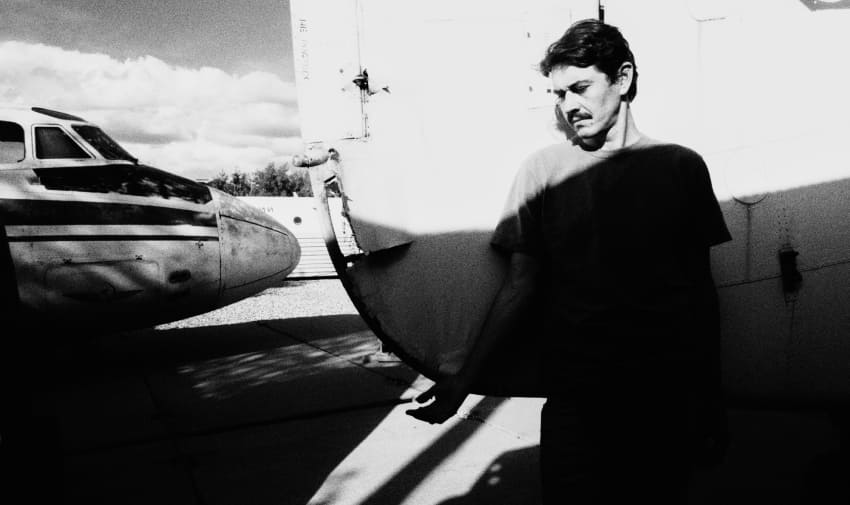
At the end of June, Grigory Skvortsov — a musician, photographer, roofer, and urban researcher from Perm — was sentenced to 16 years in a high security prison for treason. A legal aid project called First Department (Pervy Otdel), which defends citizens who are unjustly accused of crimes against the state, calls the case one of the most absurd of its kind. Skvortsov was charged with treason because he forwarded emails containing information from a book — which was freely accessible during the entire period in question and which remains popular — about Soviet bunkers. The New Tab journalist Ivan Kozlov, who is also a close personal acquaintance of Skvortsov, compiles all of the information available about the case and about the man whose hobby led to a draconian sentence.
The original piece was published in July 2025.
Skvortsov and “all that exists”
To be honest, it seems to me that all of us who are friends and acquaintances of Grigory Skvortsov assumed that at some point he’d get involved in history on a global scale. It’s true that we didn’t have in mind such a terrible story, but something more positive — musical fame, for instance.
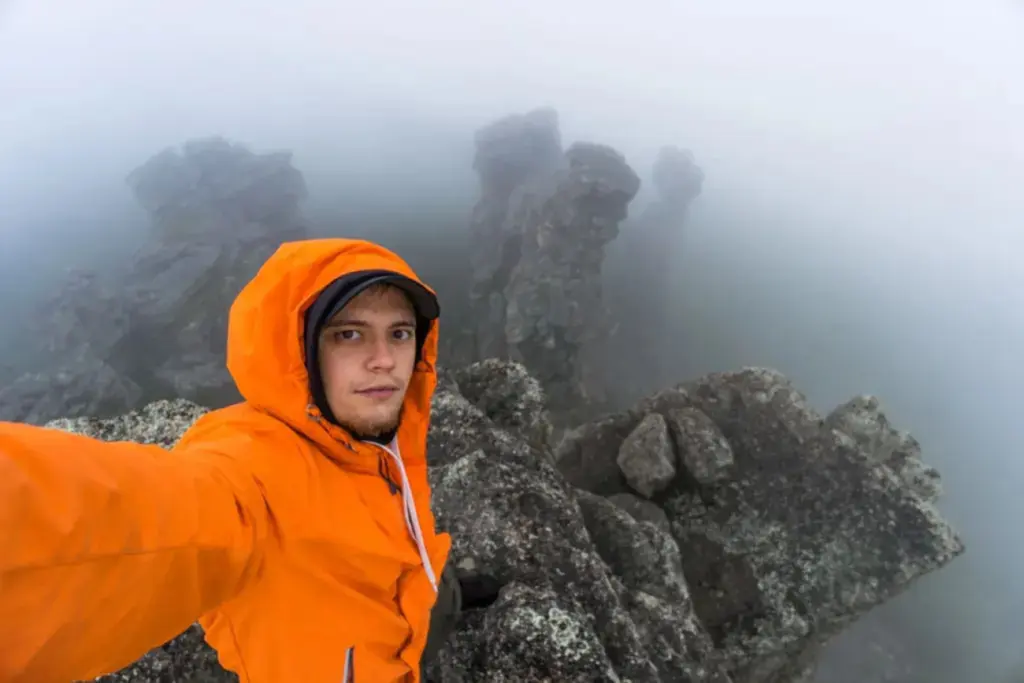
Grigory Skvortsov, an extreme photographer, a roofer, and the founder of an experimental music project called Jagath, has always stood out for his manic energy and huge number of projects and ideas at the intersection of urban research, music, journalism, and all manner of extreme activities.
We met 15 years ago in Perm, and on one of our first rooftop explorations together, he told me that he wanted to get into architectural photography. I objected that developers have no need for real photos, since renderings are now easier and cheaper. After a few years, I had dropped photography, and he had apparently effortlessly become the most sought-after architectural photographer in the city.
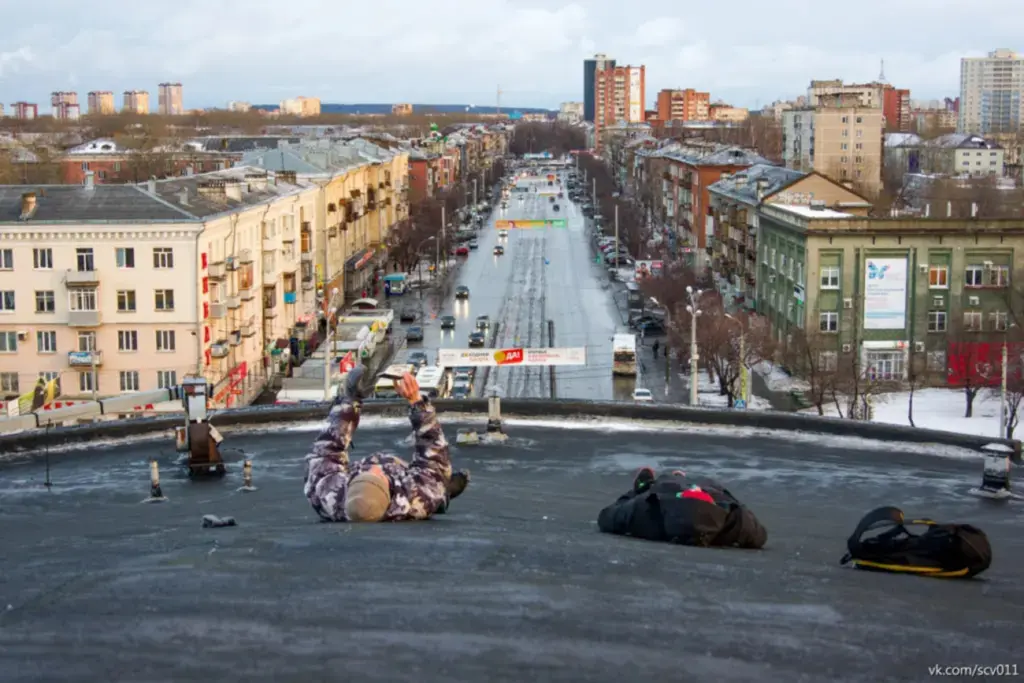
At the same time, Skvortsov was doing music, collecting sounds like the noise of a passing train, babbling water, the rumble of a pile driver, and the devil only knows what else. He was making all these recordings while conducting urban explorations and drinking sessions with like minded people, but soon enough the natural sounds around them weren’t enough, and they started to create their own.
“There’s someone methodically pounding rebar on the inner wall of a huge cistern, someone shuffling their feet in an echoey space, another person is banging a huge nut fastener they found on a champagne bottle and periodically sipping from it — still my favorite universal instrument,” one of his friends told me.
From here on out in this chapter, I’m going to use quotes from myself and from Skvortsov’s friends, all of which I collected in 2020 for a text about him in the Perm-based online magazine Zvezda. In early 2022, Zvezda was shut down because of its civic position. Its website crashed and now the text of that piece keeps appearing in its remains and then disappearing, so I think that it’s right to use it, and also right to warn you about it. Moreover, that text was light-hearted, but this one is far more important and not light-hearted, unfortunately.
So that’s it. Gradually, it was sound recording, not “roaming around” and not even photography, that became the main point of these outings, and the material for Skvortsov’s first tracks gradually crystallized out of those various noises.
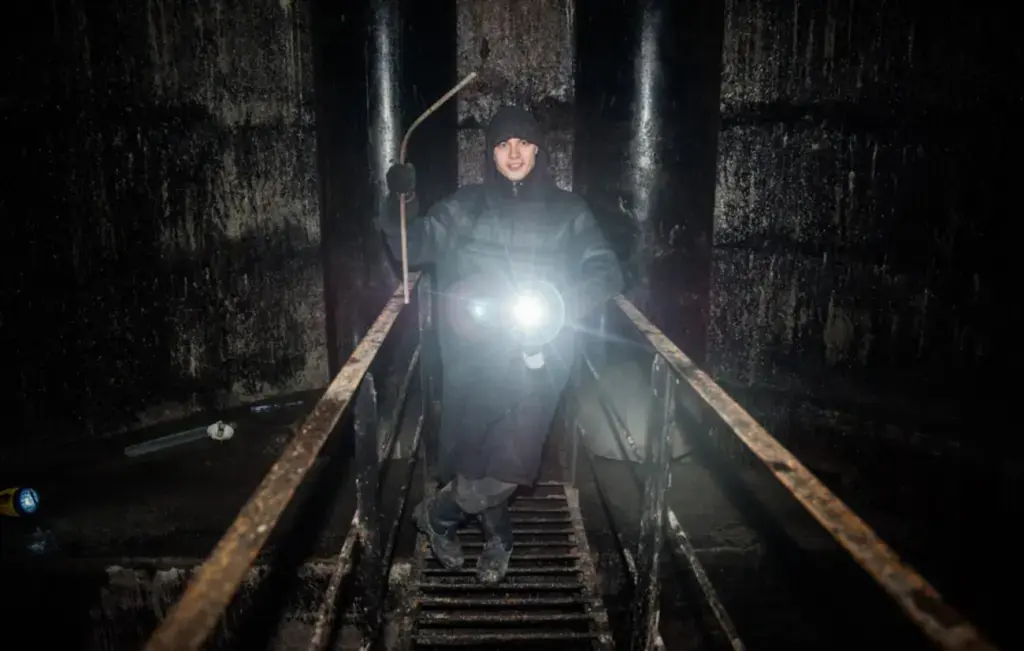
I sometimes participated in these explorations. On one of them, Skvortsov and his friends were shooting a video for which they were using candles, chains, several skulls, a crucifix, robes, and stuff like that as props. There was also a huge amount of absinthe, so I have very little memory of what happened. It started to vaguely emerge that Skvortsov had been swearing at one of the participants for starting to urinate in the bottom of a sewage channel without turning on the recorder first, and that I kept trying to find out why they’d dragged some kind of cudgel down from the surface, and they answered that they needed it for recording music. The cudgel would in fact subsequently play an important musical role.
It was around then that they hit on the name Jagath for the musical project — in Sanskrit, it means something like “world” or “all that exists.” Apart from Skvortsov and a couple of his close friends, there were no permanent members: whoever happened to turn up could leave their mark on a recording.
The group started to play concerts, a few of which took place at the bottom of a giant, closed city sewer, which looks like a ten-story tall cistern buried in the ground. One such concert went well, but one of the musicians or audience members (with Jagath, it’s hard to tell the difference, since the project is horizontally organized) thought that it could be even better: towards the end of the concert, when everyone was already climbing back up to the surface, someone poured gasoline down the sewer and lit it on fire.
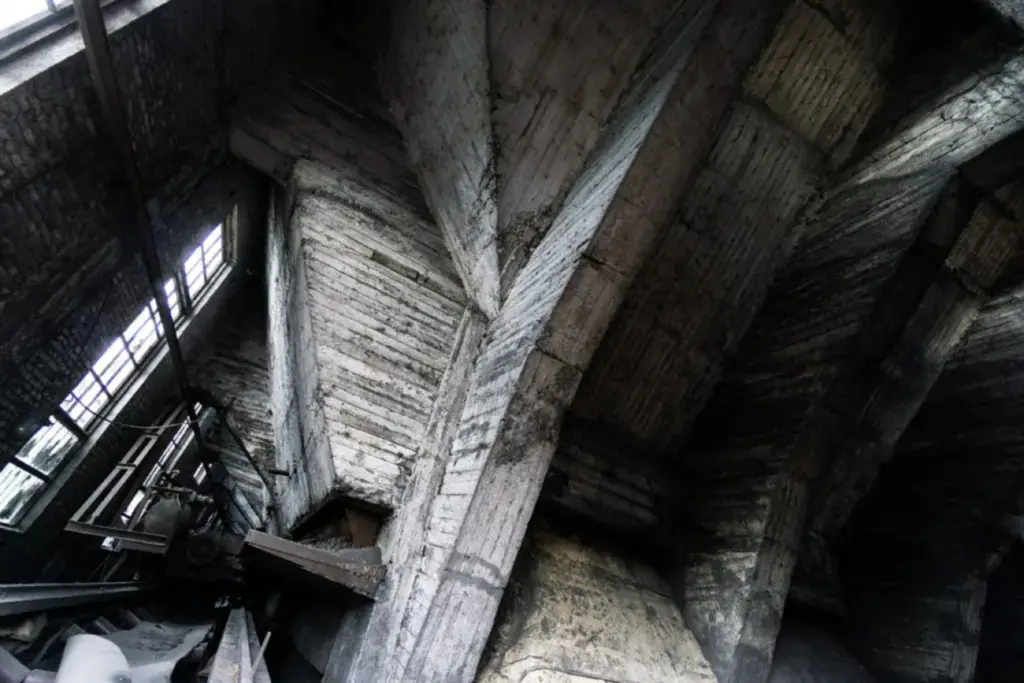
“While everyone got out safely, Grisha (translator’s note: Grisha is a common nickname for Grigory) and I were getting the equipment together,” remembers one of the group’s musicians. “We made our way up through thick clouds of smoke, basically by feel, and somewhere in the middle Grisha said that he’d left a tripod on one of the platforms. We descended a couple of platforms and found the tripod, and then we started going up again. At that moment, I thought that if we didn’t suffocate down there, it would be legendary.”
No one suffocated, and it was legendary. These irregular concerts and recordings continued for at least five years. During that time, Skvortsov managed to catch the attention of Perm regional media outlets for various other reasons — both relatively innocuous ones, like photo exhibitions in several Perm institutions (including the halls of the City Duma, which would later become part of his positive characterization in court); and more extreme ones. In 2016, he and his beloved held an impromptu wedding atop a completed, but not yet operational, 275-meter (around 900 feet) television tower. Upon the conclusion of the ceremony, police booked all the participants.
This did not particularly distract Skvortsov from his main life’s work, and in the end Jagath’s first album, Devalaya, came out.
To get it released, Grigory, like it was no big deal, wrote to Cold Spring Records, a cult English recording company with a 30-year history, which at various points has worked with stars the likes of Genesis P-Orridge, Trent Reznor, and Marc Almond. The label wrote him back offering to put out an album, which basically meant joining the ranks of those artists. It was an achievement on a global scale, albeit in fairly specific circles.
Skvortsov and existential crisis
In 2019, Skvortsov left Perm, but he returned twice before the start of the pandemic, and both times he was back, Jagath recorded an album without any preparation.
“The people who were originally involved didn’t participate in this, only my friends came,” Skvortsov said at the time. “Every time I saw that they were sad about everything, they had no work, no prospects in life, and I think the music reflects this: internal demons are breaking out.”
During that period, he grew more pessimistic about the world every day, and it started to seem like he would become a commentator. He wasn’t interested in petty political affairs, but was instead preoccupied by more global problems, like the world order and general alienation. One time, he and I got drunk, and he ripped the collar off my coat with his teeth while repeating his signature phrase, “all is decay,” in various tones.
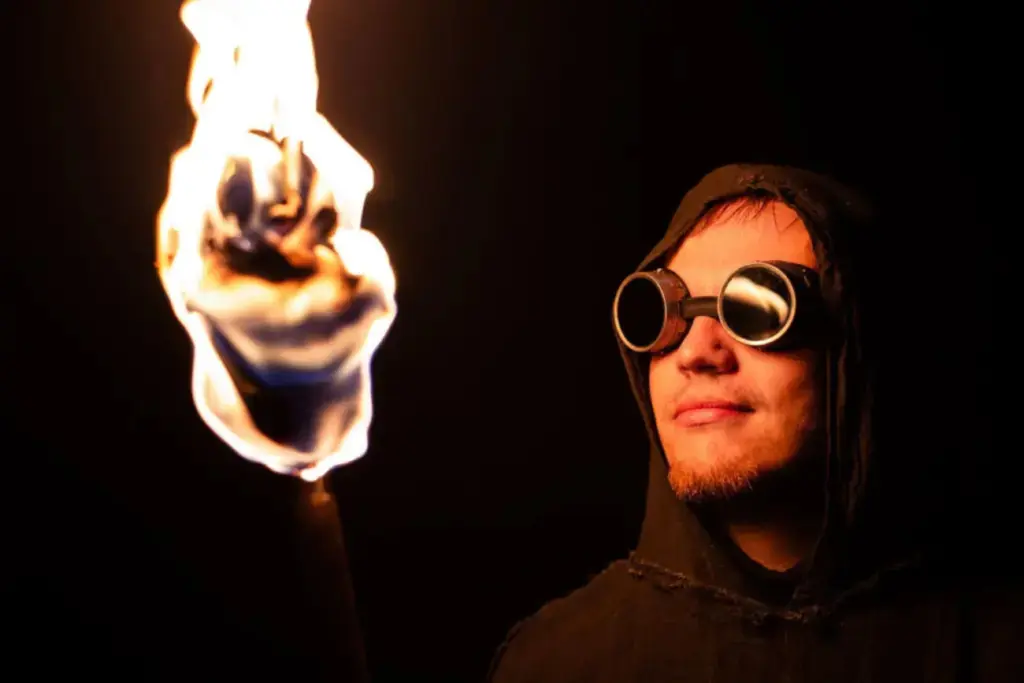
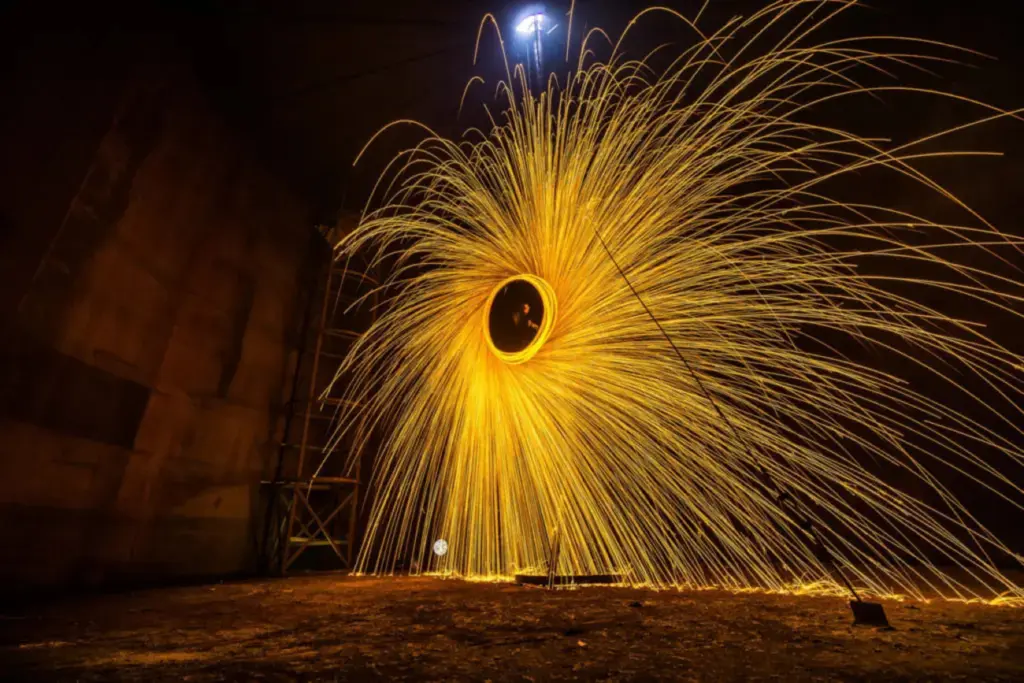
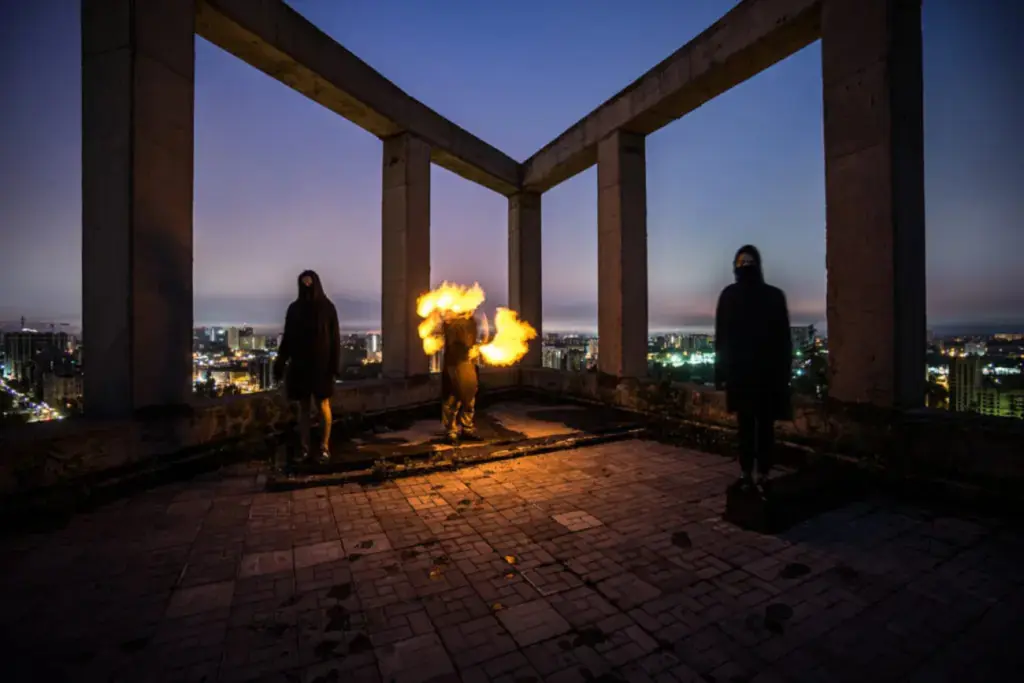
He was an architect by training, and so he also worked on developing autonomous settlements. Skvorstov got one of them polished to a pretty serious level and we even tried to push it forward, but no investors ever turned up.
Here’s how he very characteristically described his musical activities in those years:
“Jagath, for me, is an expression of existential horror, a struggle with oneself and with reality, a crisis of existence, devastation all around and internally, the impossibility of change, the attempt and the impossibility of escape. I do this so that I can share my vision of the degenerating post-industrial age. People want something life-affirming, they think that life will correct itself, but they are deceiving themselves and others: everything is frozen, everything is decay, there is nothing around.”
Five years later, this pathetic passage seems visionary.
Meanwhile, he continued to record albums regularly. Jagath’s second album was called Samadhi, and the third, Agni. Describing how the latter came to be, Skvortsov stated, “It’s cold in Russia, so we have to do something so as not to freeze to death.”
“So as not to freeze,” the people who participated in the live recording brought a couple of flamethrowers, an enormous drum, a shaman’s tambourine, a number of other percussion instruments, and a broken television into the abandoned cistern.
“Jagath is real, we are real,” Skvortsov said. “We’re not fucking sectarians, we’re not wearing masks, we’re not creating the image of monks in the mountains that they’re trying to pin on us, we’re not in facepaint like black metal fans, we don’t dress up like clowns at a kids’ party, we don’t glue horns to our head like who the fuck knows what — we just get a crowd together in an unfinished oil tank and play music, which I hope expresses our feelings. And we don’t need anything to do this. And every time it turns out new, interesting to listen to. And then I sit down and cut out all the extra junk and release it with top labels.”
Right up to the start of the pandemic, Jagath toured various cities. The group sometimes still performs even now, though without Skvortsov.
Skvortsov and the bunkers
In late November 2023, Grigory Skvortsov fell off the radar for a few days. This was normal for him, but after a couple of days everyone started to worry that something was wrong. It turned out that security officers had come to his Perm apartment, violently arrested him, and the following day had delivered him to the FSB’s investigative department in Moscow where, Skvortsov later recounted, local operatives put on tactical gloves, intending to beat a confession out of him.
Only after a few weeks did the group supporting him learn that he was facing treason charges, and then fragmentary information about the circumstances of the case started to emerge. Allegedly, Grigory Skvortsov had passed information constituting a state secret to Americans.
It took months after that for us to figure out that the “information” was a monograph by Dmitry Yurkov, a historian and employee of the Museum of Underground Moscow, called Soviet “Secret Bunkers”: Urban Special Fortifications from the 1930s to the 1960s, as well as additional archival materials on which the monograph was based.
The book Soviet “Secret Bunkers” is in fact not secret at all — it’s actually notorious, and its cover even features a stylized “declassified” stamp. The book’s website notes that about 500 documents were used in its creation. The site for the museum where Yurkov works shows that the book is sold out, but you can buy it elsewhere, like on Russian classifieds website Avito (though at the time of this article’s publication, there were no copies there either). But it is freely available to read online, and can still be borrowed from Russian libraries.
The book was widely advertised, reviews appeared in state newspaper Rossiskaya Gazeta and other state-sponsored media outlets, and when it came out in print in 2021, its authors — historian Dmitry Yurkov and illustrator Anastasia Zotova — hosted a spectacular presentation at Bunker 703, the Museum of Modern Fortification, 42 meters underground. A video recording of this presentation has been preserved. In it, Yurkov answers a moderator’s question about where the line of “secrecy” lies, and which materials can be shown and viewed, and which are forbidden to speak about.
“The word ‘secret’ is on the cover in quotation marks, as is the word ‘bunker.’ ‘Secret’ or ‘non-secret’ bunkers aren’t concepts that exist in our legislation. The concept of a ‘document’ exists. Either a document is stamped ‘classified,’ or the stamp has been removed, and then the document can be checked out from the archive by whoever wants it. As soon as the government commission on the protection of state secrets decides that a document is no longer significant to the state, that’s it — it’s accessible to historians. We were very strict in limiting the dates to 1969 [and earlier], because we couldn’t find a single declassified document on special constructions later than 1970,” Yurkov said.

Yurkov emphasized that this system is fairly poorly coordinated: physical media are not synchronized with each other. Frequently, a copy of the same document on the same topic in one archive has been declassified for many years, while in another it’s still stamped “top secret.”
Yurkov was also asked about the possibility of purchasing the book in Latvia.
“I can’t promise anything about abroad,” Yurkov answered. “Due to the delicate nature of the topic, I try not to interact with colleagues from abroad more than necessary, just in case.”
This remark was met with laughter from the audience, but three years later it no longer seems funny. Dmitry Yurkov tries not to comment on the situation with Grigory Skvortsov, which has led to some rumors among the community of underground explorers, who call themselves diggers, about his bias. He did respond to me, though with obvious reluctance, to clarify his position. From his words, it became clear that he was not pleased about the idea of becoming a public defender for one of his readers.
“I saw exactly one fact confirmed by documentation,” Yurkov said. “That there was a treason case. In cases of treason it doesn’t matter what was done, but why it was done. Simply put, you can take a photo of the landscape out the window and be convicted under this article (if you send the landscape to a foreigner with the words “this will help you defeat Russia,” for example). So I don’t really understand what connection I have to this. I work at the Museum of Underground Moscow and I study 20th century history. The materials for my research are in libraries, online, and so on.”
Among other things, Yurkov confirmed that he does not and cannot know how the classifications change on the documents he’s using at any given time.
“Internal affairs agencies don’t inform me about what is being classified and where. I don’t have the necessary status or access, and neither do my colleagues, I’m an employee of a non-state museum. The book definitely wasn’t banned, it’s still freely accessible, as are the archival materials that it’s based on. I’m also not involved in sales, we have enough staff doing that. I have absolutely no interest in getting mixed up in your political games, spy adventures, and journalistic sensations. It’s not my thing, to put it mildly,” he told me.
When he references “sales,” Yurkov is speaking about another of my questions, which he unfortunately didn’t answer, about additional materials. That, however, is both a more important and a more confusing part of the story.
Skvortsov and the archive scans
In an interview with First Department, Grigory Skvortsov answered a question about whether the book Soviet “Secret Bunkers” was really the whole story. He wrote from jail:
“Yes and no. The book really does figure in the case, but it wasn’t exactly the thing that I handed over. […] Yurkov was selling photographs of declassified archival documents, as supplementary materials for the book — there were over a thousand pages. […] I bought these documents from him and sent them, along with other photos and diagrams from the Internet, to a journalist — I wanted to share them with the public.”
Publications about the case repeat the claim that Skvortsov was jailed for sending Secret Bunkers overseas, but everything is somewhat more complicated than that. In addition to the book itself, the authors sold a collection of supplementary materials, on which the book was based.

“The supplementary materials to the book were scans from the archive, a huge number of scans of archival documents,” a close personal friend of Skvorstov said on condition of anonymity. “These are what the book was based on. There are all sorts of diagrams, texts, everything that was declassified and sent to the state archives for general access. The story seems not to be about the book itself, but about how Grisha allegedly linked these diagrams (which did not have locations marked on them) from the supplementary materials to contemporary maps, thereby giving away their locations. And some of these old bunkers from the diagrams apparently were or are still being used. The materials were sold alongside the book for a separate price, and it wasn’t only Grisha who bought them — everyone had the extra option. They’ve been wiped, evidently, and so have any mentions of them. But previously, on the book’s website, you could choose to buy just the book or the book plus supplementary materials.”
This collection of electronic documents really did exist. The Internet Archive preserves a mention of it: the project’s authors completed its distribution in the summer of 2021, and it cost only 500 rubles (around $6.50). It’s clear that there were no classified documents containing state secrets in this collection, at least not during the period when Yurkov was working with them and distributing them. It seems like that is exactly when Skvorstov bought them. This archive of documents has not been preserved in the public domain — this is the answer to the frequently asked question of why Skvortsov needed to send anything directly to anyone, if the book could be easily purchased or downloaded.
But then something happened. It’s possible that part of an already declassified archive once again became classified. The system is designed such that we are not supposed to know about this.
Grigory denies accusations that he fundamentally altered the archives in his possession, saying that “The investigator ignores the fact that the diagram from the file [from the book’s supplementary materials] contains the location of special facilities, continuing to claim that I engaged in geotagging and produced an ‘electronic diagram,’ which I did not do.”
In April 2023, Skvortsov sent the book and the collection of documents to Matt Schwartz, the chief national security correspondent for Business Insider and a freelancer for the New York Times Magazine. Schwartz’s reaction is unknown — as of publication, he had not responded to an email from The New Tab.
However, Skvortsov’s words make clear that his intention, since he by definition did not have access to state secrets, was fairly straightforward: several years before his arrest, he talked about how he would like to publish stories on his favorite topics (industrial tourism, underground installations, and things like that) in various outlets, including ones based outside the country. This desire led him to Schwartz, who it seems he picked randomly. Skvortsov showed him the collection of documents about Soviet bunkers and tried to negotiate some payment for the material, but Schwartz refused and Skvortsov ultimately forbade him to publish anything.
The ruling to charge Skvortsov (which The New Tab has access to) expressed this understandable desire in a more tendentious formulation, describing the “transfer of information about facilities in use by the Main Directorate of Special Programs (GUSP) in the interests of the defense of the Russian Federation, for material compensation in the form of money.”
As far as we can tell from the documents in our possession, all the diagrams and maps that Skvortsov sent to Schwartz were ones he found either in Yurkov’s archive or in open sources on various digger websites, where they’d been openly posted for many years.
Grigory himself writes, “Information that evidently constitutes a state secret, namely diagrams containing information about the locations of special facilities have, with permission from the FSB and GUSP, been openly accessible for decades on the Internet and continue to exist there now.”
According to the investigation, Skvortsov understood that he was distributing classified information (or, more precisely, the ruling discusses information which was restricted for distribution and which could be used in activities directed against the security of the Russian Federation), although neither Skvortsov, nor Yurkov, nor any other mere mortal could have reliably known which of the publicly available data security services had classified, and which they had not.
Skvortsov insists that the data was previously declassified “in violation of established procedures” and that his prosecution constitutes an attempt by security forces to “conceal their own failure to protect state secrets.”
Yevgeny Smirnov, a lawyer who works with First Department, is confident that this interpretation of events is more than justified, considering that Skvortsov is not the first, and obviously won’t be the last, Russian citizen to be imprisoned for disseminating unclassified secret information.
“This is typical practice,” says Smirnov. “The FSB doesn’t advise people who don’t have access to state secrets about changes to the classification of this or that document, which would formally constitute disclosure. The situation could be repeated, as a huge number of cases have been initiated regarding the transfer of information that is publicly available but that allegedly constitutes a state secret.”
By “situation” he means the story of Dmitry Yurkov’s digital archive. But thanks to Skvortsov’s case, it’s clear that some of these documents are potentially toxic, and this means that we’ve been, in some sense, warned.
We know nothing about the vast majority of documents and files scattered across the Internet like booby traps. And we won’t know until someone else gets blown up by them.
Skvortsov and the verdict
The book Soviet Secret Bunkers appeared as if in mockery on the portal for RuTracker, Russia’s largest BitTorrent tracker, on June 25, 2025. Someone clearly knows how to drum up interest in their downloads. The comments in the thread, like those in most posts about the book, are fairly uniform: people writing that this is the same book for which some Russian citizen got a draconian prison sentence.
Skvortsov has emphasized in letters from a pre-trial detention center that he used only supplementary materials in his compilations, not the book itself, but this no longer interests anyone. Dmitry Yurkov is hardly in an enviable position in this regard — he is essentially a victim of state security force’s peculiar handling of state secrets. Only he got off with just reputational damage.
Matt Schwartz has most likely already forgotten about the incidental contact that, for him, ended in nothing, and is probably not aware how it turned out for Grigory Skvortsov.
Despite numerous letters from Skvortsov’s friends, Cold Springs Records has not issued any response or released any statements in support of one of its musicians.
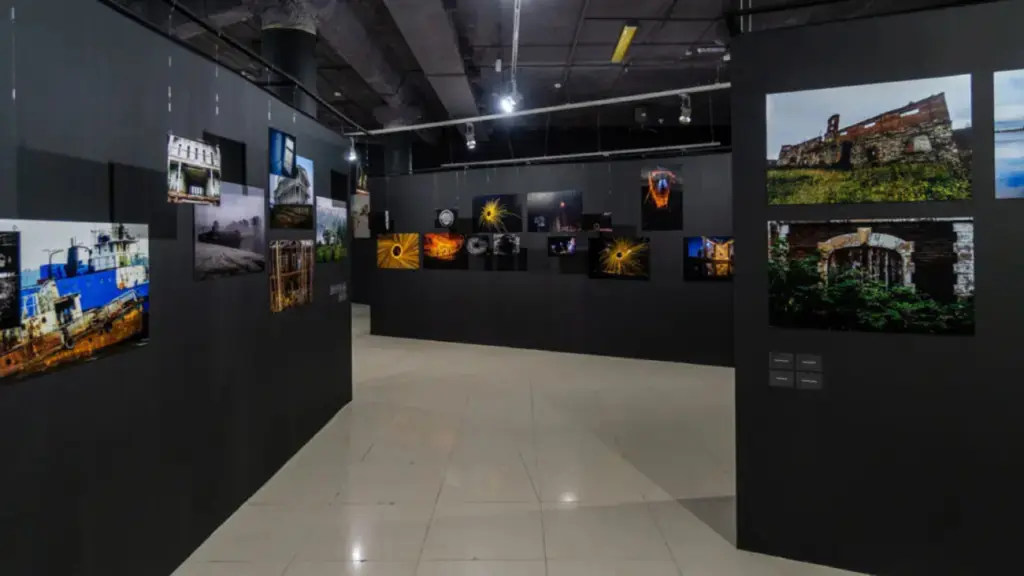
In Russia, the institutions capable of supporting Skvortsov are dwindling, and their positions are also unenviable. The state museum of contemporary art PERMM, for example, where Grigory was an active collaborator and which hosted a large exhibition of his photography in 2021, is itself currently under siege, with its former director, Nailya Allahverdiyeva, having been recently forced out of Russia and put on the country’s wanted list for “offending the feelings of the religious” (a crime in Putin’s Russia).
However, Skvortsov’s support group and Skvortsov himself remain active. Currently he remains in pre-trial detention in Perm, awaiting his appeal, and like all of us, hopes that even if a loosening of the political regime and amnesty are impossible, then perhaps his inclusion in the next exchange of political prisoners is.
I recommend that everyone reading this subscribe to the Telegram channel called, at Skvortsov’s insistence, Traitor (“Izmennik”). In my opinion, it is one of the most interesting channels dedicated to people unjustly accused of crimes against the state. Skvortsov constantly posts content there. For example, he regularly shared notes from his daily life when he was held in Lefortovo Prison, in Moscow. In the one that struck me most, Grigory describes his neighbor with interesting prison habits. Truly a document of the era.
Skvortsov is also constantly generating utopian projects, creating designs for his own merch (and honestly, sometimes baffling his friends with requests for contributions to these endeavors), producing journalistic texts, drawing concept art, developing plans for modifying the Lenin Mausoleum, and has frequently asked for help distributing one of his texts or another, so his community’s attention to them is always warranted.
The same goes for the letters which he awaits from friends and constantly writes himself. In one of them from last year, after he finished describing his latest idea, he wrote me:
“If you think ‘what the hell has he thought up this time’ — that’s normal, that’s how it should be. Any little teeny cool idea should seem like the ravings of a madman, you just have to be brave enough to try it, test it, or at least believe in it.”